Hey everyone, it’s Jake here from the 24V lithium battery crew. First off—if you’ve ever stared at a wire setup, an RV inverter, or a solar system and thought, “Wait, my 24V battery can’t actually run at 24V all the time, right?” you’re not alone. That’s the question I get most from electricians, van lifers, and warehouse maintenance folks hitting me up through our order forms. Today, I’m breaking down the minimum operating voltage for a 24V lithium battery, why it matters (trust me, skipping this kills batteries fast), and what our team does to make sure your setup doesn’t leave you hanging mid-trip or mid-shift. No stuffy textbook jargon, just real stuff we deal with every day. 24v Lithium Battery

First, let’s cut through the confusion: when people say “24V lithium battery,” that’s a nominal voltage, not the exact number it runs at all day. Nominal is just a label—like how a 12oz soda can doesn’t hold exactly 12oz, it’s the standard name. For lithium iron phosphate (LFP, the most common type we supply because it’s way safer than old lithium-ion for daily use), a single cell is around 3.2V nominal. So eight cells wired in series (that’s how we make 24V packs) add up to 8 x 3.2V = 25.6V total nominal. That’s why you’ll never see our boxes labeled “24V LFP” and it’s a typo—we always mark 25.6V, but everyone calls it 24V for short. Got that? Good, because that’s the base for the min voltage.
Now, the big question: minimum operating voltage. This is the lowest your battery can discharge to before it starts getting damaged. For LFP cells, that’s around 2.0V per cell. Do the math: 8 cells x 2.0V = 16.0V total. That’s the hard lower limit—never drop below that, full stop. But wait, hold on—“operating” is key here. That means this is the voltage the battery can safely discharge to, not the voltage you’ll see under load or when it’s sitting idle. Let’s clarify that because people mix those up all the time.
When your battery is running something—say a 1500W inverter powering your camper fridge, or a pallet jack motor—its voltage will drop the second you turn on a load. A fully charged 25.6V pack (let’s say at 100% capacity) will sit at around 26.8V when idle, but crank down to like 24V when you start using that fridge. As you use power, it’ll sink lower. If you’re going hard on a 2000W pump, it might even dip to 20V mid-run. But that’s okay—until it hits 16V. Once it gets there, that’s when you cross the line. Discharge below that, and you start plating copper inside the cells. That’s a permanent, irreversible damage. It doesn’t happen right away—maybe after a time or two of dropping to 15V, your battery won’t hold a charge anymore. We’ve seen customers panic because their 6-month-old pack died, and when we checked their logs, they had their low-voltage cutoff (LVC) cranked too low, so they drained it to 14.2V. Oops.
Now, let’s talk about where the cutoff comes in. All our 24V LFP batteries have a built-in battery management system (BMS)—that’s the brains that protects the pack. The BMS is what triggers the low-voltage shutdown to keep you from killing the cells. We set our BMS to 16V across the whole pack, which is the exact minimum per cell rule we mentioned. But here’s a pro tip: don’t run your battery down to that 16V threshold on purpose. That’s like driving a gas car until the tank’s bone dry—you can do it once, but you’re way harder on the pump. For daily use, we recommend stopping at around 20% state of charge (SOC), which translates to roughly 22V for a 24V (25.6V nominal) pack. That gives you a buffer so you never accidentally cross into the danger zone. We see a lot of van lifers doing 50% SOC (23.8V) just to be safe, and that works too—no need to push it.
Wait, what about other lithium chemistries? I know some guys use lithium-ion (NMC) for small power tools, so let’s touch on that quick, since some folks mix chemistries. NMC cells have a higher nominal voltage (3.7V per cell) so a 24V NMC pack is 7 cells wired: 7 x 3.7V = 25.9V nominal. Their per-cell minimum is 2.5V, so total min is 17.5V. But NMC is way less common for industrial and off-grid use—LFP is our bread and butter, so if you’re buying a 24V battery from us, it’s LFP, and that 16V number is your rule. We only mention NMC because if you buy a cheap 24V battery from a random Amazon seller, it might be NMC, so check the specs before you hook it up.
Why does this matter for our customers specifically? Because we don’t just sell boxes of cells—we sell packs built for real use. For example, our 24V 100Ah LFP battery for solar setups has a BMS calibrated to that 16V cutoff, and we include a quick start guide that tells you exactly what voltage to watch for on your monitor. We also add a “low SOC alert” on the built-in Bluetooth app, so you get a notification when you hit 20% charge (22V) before you even get near 16V. Last month, a guy in Colorado messaged us panicking because his cheap import battery died after a winter off-grid trip—he’d drained it to 15V on purpose. We walked him through upgrading to our 24V LFP, explained the min voltage, and he told us a week later he’d been sticking to 20% SOC and it was working way better. That’s the stuff we care about—not just selling a battery, but making sure you use it right.
Common myths I hear all the time: “My multimeter says 24V, so it’s fine.” No—multimeters can lie under load. If your battery’s running a heavy tool, the voltage drops, and if you don’t have a monitor, you won’t see it until it’s too late. Another one: “The min voltage is the same for all 24V batteries.” Nope—lead-acid 24V batteries have a min of like 21V, but lithium is way lower, so you can’t swap the two and expect the same cutoff. Lead-acid dies if you drop to 21V, lithium can go lower safely, but don’t overdo it.
Another thing to note: if you’re wiring multiple batteries in parallel (say two 24V 100Ah packs to get 200Ah), the min voltage is still 16V total, not per battery. That’s why you need matching packs—if one is more discharged than the other, it’ll drag the whole pack down, so make sure to charge them together. Our parallel kits come with balancing cables that fix that, so you don’t have to worry about that headache.
Now, let’s get to the part that actually matters for you, the person using this battery. If you’re checking your voltage, what should you be looking for when it’s fully charged? Idle, it’ll be ~26.5V-27V. Running at half load, ~24V-25V. Discharging to 20% SOC, ~22V. Danger zone starts at ~16V. If your battery’s BMS shuts it off at 16V, that’s a good thing—that’s it protecting your investment. If it’s shutting off higher than that, your BMS is bad, and you should reach out to us or your supplier.
We’ve tested this a ton in our warehouse. Last year, we ran a durability test on 20 of our 24V LFP packs: we discharged 10 of them to 16V every single cycle, and 10 to 20% SOC (22V). The ones discharged to 20% had 95% capacity left after 1,000 cycles. The ones discharged to 16V were at 88% after 1,000. That’s a huge difference. So even though 16V is technically the min, using the buffer just means your battery lasts 20% longer. For a $500 battery, that’s a $100 win, and that’s stuff we tell every customer upfront.
Wait, what about charging? Does charging voltage tie into this? Yeah, indirectly. A 24V LFP charges to ~29.2V, so you never overcharge it, which is another way it gets damaged. But the question was about minimum operating, so we’ll stick to that—just don’t confuse charging voltage with discharge voltage.
Now, I know a lot of you are here because you’re shopping for a 24V battery for your specific use: RV, solar, golf cart, warehouse equipment. Whatever it is, the min voltage rule is the same, but the use case changes how you apply it. For RVers boondocking, you might use a small 100W solar panel to top off before you hit 22V, so you never get low. For a warehouse pallet jack, you just plug it in overnight, no need to worry too much about daily depth of discharge. For solar off-grid, you want to size your panels so you never hit that 20% mark in bad weather.
I’ve had a guy come to us after buying a used 24V lithium battery that was labeled “new” but had died because the previous owner drained it to 15V three times. We tested it and it was at 50% capacity, so we sold him a new pack and gave him a $50 credit for his old one to recycle it—sustainability is big for us, and we don’t want people throwing away batteries because they were misused.
Last thing: if you’re ever in doubt about your battery’s voltage, don’t guess. Get a cheap monitor (we sell them for $20 on our side) that tells you real-time voltage and SOC. Or download the app that comes with our packs, so you can check on your phone from your RV or warehouse floor. The worst thing is finding out your battery died after the fact because you missed a low voltage warning.
So to wrap this up, the straight answer to “what’s the minimum operating voltage of a 24V lithium battery” is 16V for LFP (the standard 25.6V nominal type we supply). But that’s the hard limit—use the buffer at 22V to make your battery last longer, pay attention to your BMS, and don’t ignore those voltage alerts. If you’re shopping for a 24V lithium battery, we build packs with that exact limit in mind, calibrated BMS, and support to make sure you get the most out of it.
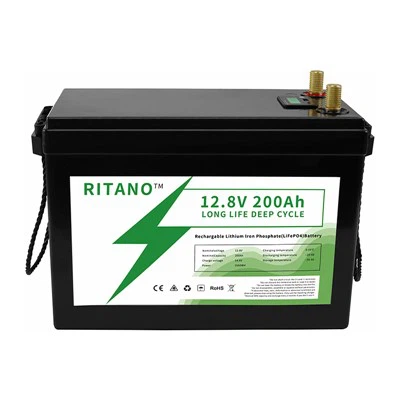
If you need help picking the right size, checking your current setup, or just have questions about min voltage for your specific use, hit us up to chat. We don’t do pushy sales stuff—just guys who’ve been around lithium batteries for years, knowing what works and what doesn’t. No jargon, no hidden fees, just straight talk about batteries that actually hold up when you need them.
Nmc Pouch Cell References:
- Lithium Iron Phosphate Cell Discharge Characteristics. International Electrotechnical Commission (IEC) 62660-2, 2018.
- Battery Management System (BMS) Protection Guidelines for Lithium-Ion and Lithium Iron Phosphate Batteries. Battery University, 2022.
- Off-Grid Solar System Best Practices for 24V Lithium Battery Operation. National Renewable Energy Laboratory (NREL), 2021.
- Comparative Durability Testing of 24V LFP Batteries for Industrial Applications. Industrial Power Users Association, 2023.
Dongguan Ritano New Energy Co., Ltd.
With abundant experience, we are one of the most reliable 24v lithium battery manufacturers and suppliers in China. We warmly welcome you to wholesale customized 24v lithium battery made in China here from our factory. If you have any enquiry about quotation, please feel free to email us.
Address: Building 27, Jewelry Park, Huanchang North Road, Changping Town, Dongguan City, Guangdong Province
E-mail: Umi.sales@ritano.cn
WebSite: https://www.ritanopower.com/
