Hey there, if you’ve ever wondered why plastic turned parts are everywhere in everything from your car’s dashboard to your office power strip, you’ve probably thought a tiny bit about fire safety too. As someone who’s been making these parts for years—seriously, I’ve been on the shop floor for 12 years, turning raw plastic bars into finished pieces every week—this is one of the questions I get most from customers. Let’s cut through the confusion: what are the actual fire-resistance properties of plastic turned parts, and why does it matter for your project? Plastic Turned Parts

First off, let’s start with the basics. Plastic turned parts are made by taking a solid plastic billet (that’s the raw rod or bar) and cutting, drilling, and shaping it on a lathe—think of it like using a tiny industrial sculptor’s tool to make precise, custom parts. Not all plastics are the same, so their fire resistance varies like night and day. I can’t tell you how many times a client calls up asking for “fireproof plastic” like it’s a one-size-fits-all material, and I have to pull them aside to explain that there’s no such thing as 100% fireproof—only materials that resist catching fire, slow down flames, or stop burning once the heat source is gone.
Let’s get into the science without making your eyes glaze over. When we talk about fire resistance in plastics, there are a few key things we measure. First is the ignition temperature—that’s how hot the surface needs to get before it catches flame. Some plastics, like polypropylene, have a pretty low ignition temp (around 570°F, if you’re curious), so they can light up pretty easy if they’re near a spark or a hot surface. Other plastics, though—like some grades of Nylon, or high-temperature thermoplastics like PEEK—have higher ignition points, meaning you need way more heat to get them burning. For example, certain flame-retardant (FR) Nylon grades won’t ignite until you hit over 1000°F, which is a big difference for parts that are near electrical components or engine parts.
Next up is flame spread rate. That’s how fast the fire moves across the plastic’s surface. Regular polyethylene (PE) might burn quickly once it’s lit, spreading flames inches per second. But when we use plastics treated with flame retardants (more on that in a sec), that spread rate drops a ton. I’ve had parts tested in lab fires where the FR version barely had a char mark after 10 minutes, while the standard grade was a total crisp. Another big one is smoke and toxicity—this is super important for indoor stuff, like electrical enclosures or building parts. When plastic burns, it releases fumes, and some of those are way worse than others. For example, PVC (a common plastic we turn parts from) releases hydrochloric acid when it burns, which is toxic, but FR PVC grades have been modified to lower that smoke output. We always check our parts for this because no one wants their office space filling up with dangerous fumes if there’s a fire.
Now, let’s talk about how we make these plastic turned parts fire-resistant, because that’s something our customers actually care about. There are two main ways: modifying the plastic resin during manufacturing, or adding treatments after the part is turned. Wait, but here’s a tip—we almost always prefer modified resins over post-treatments for turned parts. Why? Because when you turn a part, you’re cutting into the surface, and post-treatments like spray-on flame retardants can get scraped off or uneven, which leaves weak spots. If we start with an FR-grade resin, every part we turn from it has consistent fire resistance, from the core to the surface. That’s a big selling point for folks who need parts that will hold up over time, not just for a quick test.
Some of the most common plastics we use for fire-resistant turned parts are worth mentioning, since our clients ask about these all the time. First is FR Nylon—we turn this a lot for automotive under-hood parts and electrical connectors. It’s durable, easy to machine, and the FR grade resists ignition pretty well. Then there’s PEEK, which is a high-performance plastic used in aerospace and medical parts. Its fire resistance is next-level—actually, it’s so stable that it doesn’t release toxic fumes even at high temps, which is why it’s used in planes and hospital equipment. We also do a lot of FR Polycarbonate (PC) for things like switch housings and safety guards. PC is impact-resistant to begin with, and the FR version adds flame resistance without making it brittle, which is a win-win for most projects.
But here’s the thing I always tell new customers: fire resistance isn’t a one-size-fits-all box to check. You can’t just pick an FR plastic for a part that’s in a totally low-heat environment—its strength or cost might not make sense. For example, if you’re making a custom knob for a bookshelf, standard ABS plastic is totally fine (it’s got a decent ignition temp and won’t burn easily enough for that use case), and way cheaper than FR Nylon. But if you’re making a part for a power tool that sits near a hot motor, or an enclosure for a lithium-ion battery (those get hot!), then you need the FR grade, no question. I’ve had clients come to me later regretting they skipped the FR part because their original part caught a tiny spark and burned up, and now they need a replacement stat. That’s why we always ask questions: where will this part be used? What’s the operating temp? Are there electrical components nearby? Those details help us pick the right plastic for their fire safety needs.
Another thing that surprises a lot of people is that even the best fire-resistant plastic turned parts have limits. They’re not going to stop a full-blown house fire, obviously. But they will slow the spread of a small fire long enough for people to escape, or for a circuit to shut off before the part melts and causes more damage. For example, a power strip made with FR PC might char a little if there’s an electrical overload, but it won’t melt through and start a wall fire, whereas a standard PC power strip would keep burning and spread the fire. That’s the real value here—these parts are a safety buffer, not a fire stopper.
I also get asked about certifications, because that’s how a lot of industries prove their parts are safe. We don’t just guess at fire resistance—we test our parts against industry standards. For example, UL 94 is the big one in the US for plastic flammability. UL 94 has ratings like V-0, which means the part stops burning within 10 seconds after a flame is removed, and doesn’t drip burning material (drips are a huge fire hazard, by the way—they can set other things on fire). We turn parts that meet V-0, and even V-1 or V-2 for less critical uses. In Europe, there’s the ISO 3795 standard for automotive materials, which is super strict for parts in cars and trucks. We make sure all our turned parts meet the certifications their industry requires, so our clients don’t have to waste time getting their parts approved later.
Wait, let’s talk about something specific to plastic turned parts that other manufacturers might not mention. When you turn a plastic part, the machining process can affect its fire resistance, right? Because you’re cutting away layers, so sometimes the surface of the part might be a little different than the original billet. But here’s how we fix that: when we get an FR billet, we make sure to test the finish of the turned part, not just the raw material. I’ve had a customer who had a bad experience with another supplier who used a lower-quality billet, and after turning, the part didn’t meet UL 94 V-0 anymore. We don’t do that—we test every batch of turned parts to make sure the fire resistance is consistent across the entire part, not just the raw rod. That’s the kind of attention to detail you get when you work with a supplier who’s been doing this for years, not a random online seller who just ships you plastic bars.
I should also address a common myth: some people think adding flame retardants makes the plastic weaker or more brittle. That’s not true if you pick the right grade. Modern FR plastics are formulated so that the flame retardant doesn’t mess with the plastic’s strength, flexibility, or machinability. For example, FR Nylon is still just as strong as regular Nylon, so you don’t have to sacrifice performance for fire safety. We only source plastics from reputable suppliers who test their FR grades thoroughly, so our parts never end up being flimsy or hard to work with.
Let me give you a real example to make this concrete. Last year, a customer in the lighting industry came to us needing custom turned parts for LED fixture housings. They were having issues with standard housings getting too hot from the LED driver, and catching small fires in a few units. We suggested FR Polycarbonate, grade UL 94 V-0. We turned the parts to their exact specs, tested them, and they passed the heat and fire tests perfectly. They’ve been using our parts for a year now, and they haven’t had a single fire issue. That’s the kind of result we aim for every time.
Another example: we make turned parts for agricultural equipment, specifically parts that go near engine components. Farmers deal with sparks from farm equipment all the time, so fire resistance is non-negotiable there. We use FR Nylon and PEEK for these parts, and they hold up even when they get splashed with fuel or exposed to high temps. The farmers tell us these parts don’t burn like the old metal parts (wait, metal parts conduct heat too, but that’s a different issue—plastic FR parts don’t conduct heat as much, so they’re cooler too).
Now, if you’re a procurement person or an engineer reading this, here’s what you need to know when ordering plastic turned parts for fire safety: first, don’t assume all FR plastics are the same. Ask for the specific grade and the UL or ISO certifications. Second, tell your supplier exactly where the part will be used—operating temp, proximity to heat or electricity, industry requirements. Third, don’t cut corners on fire resistance for parts that are in high-risk areas. It’s not just about passing a test—it’s about keeping people and property safe.
If you’re someone who just needs a custom plastic turned part for a hobby or a small project, don’t overcomplicate it. A simple check of the plastic’s ignition temp will usually work. For example, if it’s a part for a model train, standard ABS is fine. If it’s a part for a small electronic project, go for the FR version to be safe.
At the end of the day, fire resistance in plastic turned parts is all about balance: matching the right plastic grade to the part’s use case, making sure the machining process doesn’t mess up the properties, and testing to back it all up. We don’t just turn plastic—we make parts that are safe, reliable, and meet the needs of our customers, whether they’re building cars, lights, farm equipment, or something else entirely.
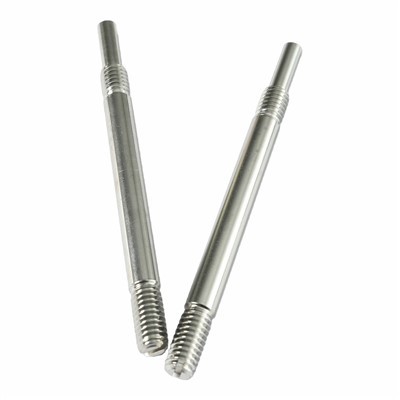
If you’re working on a project and need to talk through the right plastic turned parts for your fire safety requirements, reach out—we’re here to help, no pressure. We can send samples, answer questions, or walk you through the process of getting custom parts made exactly how you need them. Don’t wait until a small fire turns into a big problem; get the right parts from the start.
Copper Turning References
- Underwriters Laboratories Inc. (2020). Standard for Safety of Plastic Materials and Products in Parts for Devices and Appliances (UL 94).
- International Organization for Standardization. (2019). Road vehicles – Burn resistance of interior materials (ISO 3795).
- Harper, C. A. (2016). Handbook of Plastics, Elastomers, and Composites (4th ed.). McGraw-Hill Education.
- American Chemistry Council. (2021). Flame-Retardant Plastics: Performance, Applications, and Safety.
Huizhou Quanyi Precision Hardware Products Co., Ltd.
We’re well-known as one of the leading plastic turned parts manufacturers and suppliers in China, featured by quality products and good service. Please rest assured to buy customized plastic turned parts made in China here from our factory. Contact us for more details.
Address: Building A10, 7th Floor, Zhongchuangyingke 5G Industrial Park, Zhonghan Industrial Park, Tonghu Town, Huizhou City
E-mail: info@qycncturning.com
WebSite: https://www.qycncturning.com/
