Hey everyone, it’s Jake here, and if you’ve ever stood next to a utility pole at 2 a.m. during a summer heatwave, listening to that low hum coming from the big metal box on the pole, you’ve met one of the unsung heroes of the power grid: the distribution transformer. I’m part of a distribution transformer supply company, so I get way more questions than I should about how these things actually work—especially that weird little part called a tap changer. Most people hear “tap changer” and their eyes glaze over like I just pulled out a college physics textbook, but trust me, it’s way simpler than it sounds, and it’s the reason your AC doesn’t die right when you crank it up at 3 p.m. Distribution Transformer
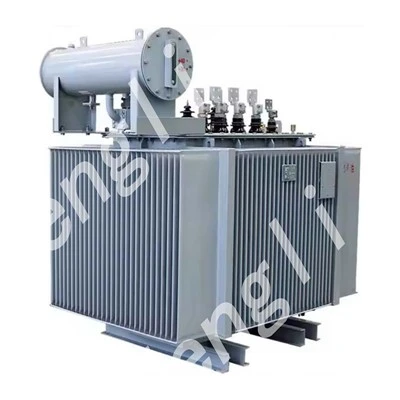
Let’s start with the basics, no jargon, I promise. Distribution transformers do one main job: take the high voltage that comes down those big transmission lines (you know, the ones on the super tall towers) and step it down to the 120/240 volts your house uses for your fridge, TV, and that space heater you refuse to stop using in the winter. But here’s the thing—power grids aren’t perfect. The voltage coming through those transmission lines fluctuates all the time. Maybe a factory nearby kicks on a huge machine and siphons extra power, making the voltage drop a little. Or on super cold days, everyone’s cranking their heaters, and the lines can carry a little more than usual, pushing the voltage up too high. If that voltage gets too low, your lights dim like you’re in a horror movie. If it gets too high? You might fry your phone charger or blow a fuse. That’s where the tap changer comes in. It’s like a volume knob for your transformer, adjusting the voltage on the fly to keep it steady right where it needs to be.
Wait, let’s get into how it’s built, just enough to make sense. Every transformer has two big coils of wire inside: a primary coil that takes in the high voltage from the grid, and a secondary coil that sends out the low voltage to your house. The amount of voltage that comes out depends on how many turns of wire are on each coil—like, if the primary has 1000 turns and the secondary has 100, you get 1/10th the voltage, right? That’s step-down 101. Now, the primary coil isn’t just a solid piece of wire. It’s got a bunch of little “taps” along it—think of them as different stop points on that volume knob. Each tap corresponds to a slightly different number of turns on the primary coil. That’s the key. The tap changer’s whole job is to flip between these taps, changing how many turns are connected to the primary, which automatically tweaks the output voltage on the secondary.
Now, there are two main types of tap changers we use here at the company, and I get asked all the time which one is better. Let’s break them down real simple: on-load tap changers (OLTCs) and off-circuit tap changers (OCTCs). OCTCs are the older, cheaper, no-frill ones—they only work when the transformer is completely turned off, no power running through it. You have to shut off the whole circuit to adjust them, which means if the grid’s voltage is messed up right now, you can’t fix it until someone shows up to flip the switch. These are mostly used in small, quiet areas where voltage fluctuations aren’t super wild, like a small suburban neighborhood where not too many people are running big appliances at once.
OLTCs? Those are the workhorses we sell most of now, especially for places with heavy usage or tricky grid conditions. They adjust the taps while the transformer is live, no need to shut anything down. How do they do that without causing a spark or blowing the whole thing up? That’s the smart part. Inside an OLTC, there’s a switch mechanism that moves between taps, but it uses a small resistor to bridge the gap between the old tap and the new one for half a second. That resistor keeps the current from jumping when the switch flips, so it’s smooth, no sparks, no outage. Some OLTCs are even hooked up to sensors that monitor the output voltage every millisecond, so they adjust themselves automatically before you even notice the lights flickering. That’s the tech part that makes most people’s heads spin, but the end result is just a steady 120 volts when you turn on the lights.
Let me give you a real example of why this matters. Last summer, we had a client in a small city in Texas that complained about all their transformers frying phone chargers and AC units during peak heat. Everyone was running AC at 3 p.m., the grid was stretched thin, and the voltage was spiking to like 135 volts—way higher than the standard 120. The old OCTCs on their transformers could only be adjusted once a month manually, so by the time someone showed up, the voltage would swing again. We swapped them out for OLTCs that night, and within a week, their voltage stayed between 118 and 122 volts 99% of the time. No more fried electronics, no more customer complaints. That’s the tap changer doing its job.
Wait, I should bust a common myth here. A lot of people think the tap changer is fixing the voltage coming into the transformer, but no—it’s fixing the voltage going out. The tap settings are calibrated to give the secondary coil exactly what we need. So if the grid sends in a little too much voltage, the tap changer will flip to a tap with more turns on the primary, which cancels out the extra, bringing the secondary voltage back down. If the grid sends too little, it flips to a tap with fewer turns, so the secondary voltage goes up to where it should be. It’s like balancing a scale, one flip at a time.
Now, from a supplier’s perspective, here’s what I want folks to know about tap changers and transformers. Not all tap changers are created equal. A cheap off-circuit tap changer might work for a small cabin, but if you’re running a shopping center or a whole subdivision, you need an OLTC that can handle constant adjustments without breaking. We don’t just slap any tap changer onto our transformers—we match the tap type to the specific grid conditions of the area our client is in. If a client is in a place with super stable grid voltage, we’ll recommend a reliable OCTC to keep costs down. If they’re in a busy urban area with lots of demand spikes, we’ll go with a robust OLTC that can handle hundreds of adjustments a day. We test every single tap changer on our transformers before they leave the warehouse, too—no cutting corners. Last quarter, we had a batch of 20 transformers going to a city in Florida, and we ran each OLTC through 1,000 simulated voltage changes to make sure it wouldn’t jam up during a heatwave. That’s the kind of attention to detail we put in, because we know our transformers aren’t just metal boxes—they’re keeping the power on for people’s jobs, their homes, their family dinners.
I also get asked if tap changers ever go wrong. Yeah, like any part, they can. The most common issues we see are just wear and tear—over years of flipping back and forth, the contacts in the tap changer can get dirty or worn out, which makes the adjustment bumpy. Sometimes, if a power surge hits, it can damage the resistor inside an OLTC, which messes up the smooth transition. That’s why regular maintenance is important, even if your tap changer is working fine. We offer maintenance checks for all the transformers we supply, and we make sure our clients know when to replace parts before they cause an outage. Last year, a client called us at 6 a.m. saying their lights were flickering, and we sent a tech out to check the tap changer—turns out one contact was worn, we replaced it in an hour, no outage, no big mess. That’s the service we pride ourselves on.
Let me wrap this up with something practical, because I know most of you reading this probably don’t work in power distribution, you just want to know why that box on your pole works. The next time your lights don’t dim when you turn on your oven, when your AC keeps running all summer without shutting off because the power is steady, thank the tap changer. It’s the quiet, unassuming part inside the transformer that does all the heavy lifting, adjusting to every little change in the grid so you don’t have to.

If you’re a utility manager, an engineer, or someone who just needs a new distribution transformer (or wants to upgrade the ones you have), we’ve got you covered. We don’t sell one-size-fits-all transformers—we work with you to figure out what kind of tap changer, what voltage rating, what size you need for your specific location and needs. No weird hidden fees, no overcomplicated sales pitches, just straight talk about what works for your grid. If you’re tired of outages, fried electronics, or transformers that can’t keep up with demand, hit us up to chat. We’ll walk you through all your options, no jargon, no pressure.
Three Phase Oil Immersed Transformer References
Distribution Transformer Tap Changer Fundamentals. IEEE Power & Energy Society.
“Load Tap Changer Technology for Modern Grids.” Electric Power Research Institute (EPRI) Journal.
Distribution Transformer Maintenance Guidelines. North American Electric Reliability Corporation (NERC).
Zhejiang Jiangshan Hengli Electrical Co., Ltd.
Zhejiang Jiangshan Hengli Electrical Co., Ltd. is one of the most professional distribution transformer manufacturers and suppliers in China, featured by quality products and low price. Please rest assured to wholesale cheap distribution transformer in stock here and get pricelist from our factory. Customized orders are welcome.
Address: 212 Fuzhu Street Sidu Town, Jiangshan, Zhejiang, China
E-mail: henglijs@foxmail.com
WebSite: https://www.henlypower.com/
