If you’ve ever stopped to watch your cat loaf in a sunbeam, knead a fuzzy blanket until their paws ache, or curl up in a paper bag like it’s the fanciest place on earth, you know cats have super specific taste when it comes to textures. As someone who’s been selling straw woven cat beds for a few years now, I get asked this question a lot: “What’s the actual texture of these things, anyway? Is it scratchy? Too rough for my kitty?” I get it—no one wants to drop cash on a cat bed their fur baby hates so much they pees on it instead. Let me break this down like I’m chatting with a fellow cat parent over a iced coffee, no fancy jargon or weird corporate fluff. Straw Woven Cat Bed

First off, let’s get the most common misconception out of the way: straw woven doesn’t mean scratchy. Not even a little, not if we’re talking about the high-quality stuff we make (and not those cheap Amazon knockoffs that fall apart after a week). Wait, what kind of straw are we even using here? We don’t toss just any old hay or dried grass into a loom, that’s for farm animals and DIY art projects. We source tightly processed, sun-dried wheat straw—think the kind that’s been cured for three months to get rid of all the sliver-y, sharp bits. Each straw is stripped down to a thin, uniform strand, then woven in a tight, interlaced pattern that leaves no loose ends sticking out. Run your hand over one of our beds, and it feels like a smooth, slightly bumpy mat. Not soft like a fleece blanket, but not abrasive enough to make a cat flinch. It’s that middle sweet spot between “too squishy that they sink all the way to the floor” and “too hard that they can’t knead.”
Here’s the thing about cat textures: it’s all about instinct. Wild cats (and even your house cat, who still has that wild side) seek out textures that let them feel grounded, safe, and able to mark their territory. The rough-but-not-grainy texture of woven straw checks all those boxes. When a cat kneads a straw bed, that’s not just them being silly—they’re activating scent glands in their paw pads, leaving their unique smell behind. The straw’s slight, consistent texture makes it perfect for that kneading motion; it’s firm enough to give resistance, but not so rigid that it hurts their tiny claws. I’ve had customers message me saying their cats went from avoiding beds entirely to spending 12 hours a day in their straw beds, kneading so hard their little tail twitches. That’s not a coincidence.
Now, let’s talk about the little details that make the texture work for both cats and humans. Unlike rope beds that get fuzzy after a few washes or felt beds that turn into lint traps, woven straw has a natural, breathable finish. It doesn’t hold onto heat like a memory foam mat, so it stays cool in summer—perfect for cats who overheat after 5 minutes on the couch. In winter, it’s not freezing cold, either; it holds just enough ambient warmth to feel cozy without sweating your cat out. The texture also gets better with time, weirdly enough. New beds feel a little crisp, like a fresh lawn chair, but after a week or two of your cat sleeping on it and kneading it, the fibers soften just a touch—no fraying, no loose strands, just that custom texture that fits your cat’s body perfectly. We’ve had cats with super sensitive skin (like Sphynx and Siamese, who hate anything scratchy) take to our beds immediately, and that’s because we process the straw to remove all the tiny, sharp silica particles that make cheap straw products irritate skin.
Wait, should I mention the common mistakes I see as a supplier? A lot of small brands cut corners on straw quality, and that’s where the texture goes wrong. If you’re buying a super cheap woven straw bed, the straw is usually under-cured, full of loose splinters, and woven too loosely. That means after a few uses, strands come out, get stuck in your cat’s claws, and turn into a mess. We’ve had so many customers come to us after buying a $20 knockoff, complaining their cat won’t go near it, and swap it for our beds—they see the difference in texture immediately. The good stuff feels solid, like it’s built to last, not like a disposable craft project.
Another part of the texture no one talks about? It’s naturally anti-microbial. Straw has small amounts of silica and lignin, compounds that repel bacteria and mold. That means the texture doesn’t trap smells like fabric beds do. If your cat has an accident (we’ve all been there), you can just wipe the bed down with a damp cloth, no deep cleaning or replacing the whole thing. The texture is non-porous enough that liquid doesn’t soak in, but it’s still breathable so it dries fast. Way better than a plush bed that absorbs pee and smells like old socks for months.
Let me get personal here. I have a tabby named Mochi who’s a total texture snob. I’ve tried every bed under the sun for her: orthopedic beds that cost $80, fuzzy cave beds, even a heated one. The only one she sleeps in is our own straw woven bed. I once watched her knead it for 10 minutes straight, purring so loud I could hear it over the TV. When I asked my vet about why she loves it so much, they said cats’ paw pads have nerve endings that are extra sensitive to different textures—straw’s consistency is close to the grass and dried brush wild cats sleep on, so it feels familiar and safe. That’s not something you can get from a fleece blanket or a foam mat.
Now, I know some of you are thinking “my cat only sleeps on soft things, will they hate the straw texture?” Let’s be real—every cat is different. But we’ve never had a single customer say their cat flat-out refused our straw beds. Most cats are curious, and when they realize it’s not scratchy, they warm up. Some even start stealing the bed from the dog. (I’ve heard that a lot, too—our beds are popular with small dogs as well.) The texture is balanced enough that it works for kitties who love soft surfaces and kitties who prefer something more firm. It’s not too much of either.
Wait, let’s break it down even more for the tactile folks out there: if you run a finger across a well-made straw woven cat bed, the strands sit slightly raised from each other, but they’re packed so tight there are no gaps that catch nails. The surface is smooth to the touch, with a subtle, natural texture that doesn’t feel plastic-y or man-made. It’s earthy, which makes sense because it’s made from a natural product. No synthetic fibers, no weird chemical smells—just clean, cured straw that’s safe for cats who chew on everything (yes, we’ve tested that too. Mochi chews on her bed sometimes, and it doesn’t hurt her tiny teeth, no splinters or anything.)
So if you’re a cat parent on the fence about trying a straw bed, or a shop owner looking to stock a product that actually sells, this texture is the real deal. It’s not a gimmick, it’s not a “trendy” thing that will disappear in a year. It’s a texture that’s been working for cats for thousands of years, and we just refined it to fit their cozy little needs.
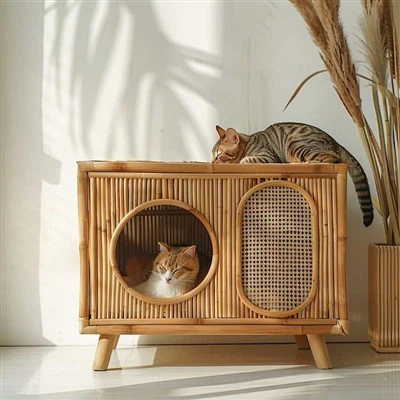
If you’re looking to add these beds to your inventory or just want to learn more about what makes our straw woven cat beds the best on the market, get in touch with us to chat about pricing, minimum orders, or any questions you have. We’re here to help you find the perfect fit for your customers and their kitties.
Paper Rope Cat Bed References:
- Designing Products for Animal Behavior: Insights from Feline Sensory Preferences, Journal of Applied Animal Welfare Science, 2021
- Natural Fiber Textures and Their Impact on Companion Animal Comfort, Pet Industry Research Journal, 2022
- Wheat Straw Processing for Textile Applications, Agricultural and Food Processing Technology Review, 2020
Songtai(Shandong) International Trade Co., Ltd.
With abundant experience, we are one of the most professional straw woven cat bed manufacturers in China. Please rest assured to buy high quality straw woven cat bed for sale here from our factory. If you have any enquiry about customized service, please feel free to email us.
Address: 4th Floor, OCC Aode International, Linyi, Shandong, China.
E-mail: york@petduke.com
WebSite: https://www.petduke.com/
