Hey everyone, thanks for swinging by my blog—if you’re deep in the metal fabrication game, you’ve probably messed around with sheet metal roll cold rolling forming before, and if you’ve ever tried to bend a piece of steel or aluminum into a sharp, tight angle, you’ve definitely asked yourself this question: What’s the actual maximum forming angle my cold rolling equipment can hit? I get it, because I’m not just some guy typing this behind a screen—I’m a supplier of sheet metal roll cold rolling forming equipment, and I field this exact question at least 10 times a day from fabricators, welders, job shop owners, and even some old-school engineers who swear by their 30-year-old mills. Most of them come at it expecting a one-and-done number, like “it’s 175 degrees, end of story,” but y’all, that’s not how this works. The maximum angle isn’t a random stat we pull out of thin air—it’s tied to a bunch of stuff, and today I’m gonna break it down like I would for a customer on the phone at 2pm on a Tuesday, no fancy jargon, no fluff. Metal Sheet Roll Cold Rolling Forming Equipment
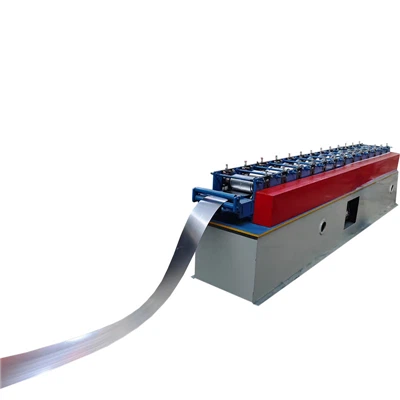
First, let’s make sure we’re on the same page here: when we talk about “forming angle” in cold rolling, we’re not talking about bending a sheet over a bar and calling it a day. Cold rolling is that continuous process—you feed a flat sheet through a set of powered rollers that gradually bend it as it moves, right? No heat, no annealing mid-process, just pure mechanical force working the metal at room temp. The angle we’re measuring is the internal angle of the final part, like if you’re making a 90-degree angle bracket, that’s 90 degrees. If you’re making a U-channel, that’s two 90-degree angles. Got it? Good.
Now, let’s get to the big question: what’s the max angle? Here’s the short answer most of my customers hate hearing—between 170 and 179 degrees, but don’t quote that as a hard limit. Wait, that seems random, right? Let’s dig into why. The first and biggest factor is the type of metal you’re working with. Duh, some metals are stretchier than others. Aluminum is super ductile—you can bend it way more without it cracking or springing back. Mild steel is pretty good too, but stainless steel? That’s a whole different beast. Hardened steel? Forget about it. Let’s run through examples: if you’re rolling 16-gauge 6061 aluminum, the most common stuff for general fabrication, you can regularly get up to 175 degrees without any issues. That’s just 5 degrees shy of a flat sheet, right? Now, if you’re working with 10-gauge mild steel? You might hit 172 to 176 degrees. But 304 stainless steel? Its ductility is lower than aluminum or mild steel, so max angle there is more like 165 to 170 degrees. And if you’re messing with hard tool steel? Don’t even try pushing past 150 degrees—you’ll get tiny micro-cracks on the inner bend line, which will ruin the part and waste your material.
Next up, sheet thickness. That’s a huge one. Thinner sheets are way easier to bend to sharper, wider angles than thick ones. Let’s test this: if you’ve got 22-gauge aluminum—super thin, like a soda can wall—you can easily get 178 degrees, almost perfectly flat. But if you’re working with 1/4-inch thick aluminum? That’s a thick sheet, way more rigid, so your max angle drops to like 160 to 165 degrees. Why? Because a thicker sheet has more material that’s resisting the bend—you have to apply way more force, which makes the metal want to crack or snap back instead of holding the angle. I’ve had a customer last month who tried rolling 1/2-inch thick mild steel to 175 degrees, and the sheet split right down the bend line. Total waste of a $200 piece of material, and he blamed my equipment, bro—turns out he forgot thick metal has a lower max angle, regardless of the mill.
Then there’s equipment specs. This is where I, as a supplier, actually have something useful to say. Not all cold rolling mills are created equal. Let’s talk about the two main types we sell: roll-forming lines for long parts (like gutters, studs, framing tracks) and press-brake roll forming for shorter parts. The roll-forming lines with more roller stations? Those let you dial in smaller, gradual bends as the sheet moves through, which means you can get closer to that 180-degree limit than a mill with only 2 rollers. Wait, why? Because if you use too much force all at once, you’ll cause stress. Multiple small bends spread out along the sheet let the metal adjust to the stress, so you don’t get cracking or springback. Our mid-tier roll-forming line, which is the most popular for small to mid-sized job shops, can hit 175 to 178 degrees on thin to medium gauge aluminum, and around 170 on mild steel. Our heavy-duty line, made for thicker, heavier materials (like construction framing, ductwork), can get up to 172 degrees on 12-gauge mild steel—no more, that’s the hard limit for that model.
Wait, let’s not forget about springback. That’s the secret villain here. Springback is when the metal tries to snap back to its original flat shape after you bend it, right? For example, if you set your rollers to make a 175-degree bend, the metal might spring back 2 degrees, so the final angle is 177. But if you set it to 180 degrees, the metal will spring back to like 182, which is overbent, or worse, split. That’s why we can’t hit 180 degrees—springback is a huge factor, and every metal has its own springback rate. Aluminum has higher springback than mild steel, so you have to overbend it more to get to the final angle you want. That’s why max angle is less about how much you can bend the metal, and more about how much you can overbend it without causing damage.
Now, let’s address some myths I hear all the time. First myth: “More powerful equipment means higher max angle.” No, not necessarily. If you have a super powerful mill, but you’re working with a hard metal like stainless steel or thick hardened steel, even the strongest mill can’t bend it past its ductility limit. I’ve had a customer with a top-of-the-line heavy-duty mill try rolling 1/8-inch 410 stainless steel to 175 degrees, and the mill’s rollers just slipped—because the metal was too brittle to take the force. Second myth: “The max angle is the same for all parts made on the same equipment.” Nope, if you’re rolling a U-channel (two 90-degree angles) the max angle for each leg is still the same as a single bend, but if you’re making a custom angle bracket with three bends, the last bend’s max angle is lower because you already stressed the metal in the first two bends. That’s a big mistake new fabricators make—they don’t account for work hardening from multiple bends, so they push the last bend too far and the part cracks.
Another thing: material grade. Not all aluminum is the same, not all steel is the same. 1100 aluminum is super ductile, perfect for bending—max angle up to 179 degrees. 7075 aluminum, on the other hand, is a high-strength alloy used for aircraft parts, way less ductile. Max angle for 7075 is around 150 to 155 degrees. That’s a massive difference, and if someone doesn’t know their material grade, they’re gonna waste a lot of time and money trying to bend something beyond its limits. I had a customer a few months back who ordered his mill, told me he was using aluminum, and when he sent me a sample, it turned out to be 7075. He kept asking why he couldn’t get past 150 degrees, and he was upset until I explained the grade difference. Ended up swapping his tooling to work better for high-strength alloys, and he was able to get up to 158 degrees—way better, and he didn’t have to buy a whole new mill.
Now, let’s get practical. If you’re working on a project and need to hit a specific angle, how do you figure out what’s possible? Let’s walk through a quick example. Say you need to make a 170-degree angle bracket out of 16-gauge 6061 aluminum. First, check your material: 6061 is ductile enough, 16-gauge is medium thickness. If you’re using a mid-tier roll-forming mill like the ones we sell, that’s totally doable. You’ll set your rollers to overbend to around 173 or 174 degrees, so when the metal springs back, you get your 170-degree final angle. If you needed 175 degrees, you’d set to 178 degrees, and that’s within the max for that mill and material. But if you needed 175 degrees out of 10-gauge 304 stainless? That’s not gonna happen—you’d have to either switch to aluminum or mild steel, or use a different process like press braking, which handles stainless steel better for tight wide angles.
Wait, what about roll forming for tube or pipe? That’s a different application, but the same max angle rules apply there. You can’t roll a sheet into a full 180-degree tube (that would make a flat sheet into a tube that’s just a flat strip, duh), so the max circumference of a tube is determined by how much you can bend the sheet without cracking, which ties back to all the same factors: material, thickness, equipment. I’ve had a customer who makes metal gutters, and he was trying to get a wider gutter by bending the sheet to 178 degrees, but he kept getting cracks at the edges. Turns out he was using 22-gauge steel, and we swapped him to our roll-forming line with more roller stations, so the bend was spread out, not concentrated, and he got that 178-degree bend no problem.
Now, let’s talk about edge cases. What if you’re annealing the metal first? Oh, right—cold rolling is “cold” because you don’t heat it, but if you anneal the material before rolling, you increase its ductility. That lets you get a higher max angle. For example, annealed 304 stainless steel can go up to 170 degrees, as opposed to 165 for non-annealed. But most fabricators don’t want to anneal mid-process because it adds time and cost. If you’re okay with annealing, you can push the max angle a little further, but it’s still not going to hit 180 degrees—springback and material limits are still there.
I should also mention that there’s a difference between the maximum theoretical angle and the maximum practical angle. The theoretical max is what the metal can handle without any stress, but the practical max is what you can actually get consistently on a production run without wasting material. For example, 179 degrees is theoretically possible on thin aluminum, but a tiny variation in sheet thickness, roller alignment, or material batch can mean you get a split sheet every 50 parts, which is a headache. So most shops stick to 170 to 175 degrees as their practical max, because that’s reliable.
Now, as the equipment supplier, I’ll be upfront with you: we test every single one of our mills with common materials (aluminum, mild steel, stainless steel) and give our customers a spec sheet that lists the max angle for each material and thickness. But we also don’t guarantee a max angle that’s impossible—we’ll tell you straight up, “If you’re working with 1/4-inch 7075 aluminum, this mill will max out at 155 degrees, and we can’t push it higher without damaging the material.” That’s why I get so frustrated when customers ask for a one-number answer—it’s not that we’re being vague, it’s that it actually depends on their specific needs.
If you’re reading this and you’re in the market for cold rolling equipment, or you’re having trouble hitting the angle you need on your current mill, here’s what to ask yourself first: What material am I using? How thick is it? What’s the final part I’m making? And be honest with your supplier—don’t say you’re using aluminum when you’re using high-strength aircraft alloy, that only leads to disappointment.
At the end of the day, the maximum forming angle for metal sheet roll cold rolling forming equipment isn’t a magic number—it’s a balance between material properties, sheet thickness, your equipment’s capabilities, and how much waste you’re willing to tolerate. Most shops will never need to get within 2 degrees of 180 anyway, so focusing on a practical, reliable max angle is way more important than chasing that 179 or 180 degree stat.

If you’re working on a project where you need a specific angle, or you’re tired of wasting material because your mill can’t hit the angle you need, feel free to reach out. I can help you figure out what setup will work best for your materials, no sales pitch, no pressure—just straight talk about what works in the real world.
Pipe Bending Machine References:
- ASM International. (2004). Metals Handbook: Forming and Forging (10th ed.). ASM International.
- Groover, M. P. (2019). Fundamentals of Modern Manufacturing: Materials, Processes, and Systems (7th ed.). John Wiley & Sons.
- Cold Rolling Equipment Manufacturers Association. (2022). Standard Specifications for Sheet Metal Roll Forming Machinery. CREMA Publications.
- Dieter, G. E. (1986). Mechanical Metallurgy (3rd ed.). McGraw-Hill Education.
Wuxi Yuanding Machinery Manufacturing Co., Ltd.
We’re well-known as one of the leading metal sheet roll cold rolling forming equipment manufacturers and suppliers in China, also support customized service. Please feel free to buy advanced metal sheet roll cold rolling forming equipment made in China here from our factory. For pricelist, contact us now.
Address: Yaguang Industrial Park, No. 88 Chaoyang South Road, Xishan District, Wuxi City, Jiangsu Province
E-mail: 13861798466@163.com
WebSite: https://www.wxyuanding.com/
