Hey there, I’m [Your Name], a rubber conveyor belt supplier who’s spent the last 12 years geeking out over these workhorses—whether they’re hauling grain at a rural farm, ore at a mine, or even packaged goods through a warehouse. I get it: when a customer hits me up and asks, “What’s the max load my belt can handle?” it’s the #1 question that crosses their mind. It’s not a one-size-fits-all answer, and I’ve seen too many people cut corners on specs or overestimate capacity and end up with a broken belt that halts their whole operation. Let’s break this down like we’re chatting over a coffee, no stuffy textbook jargon. Rubber Conveyor Belt
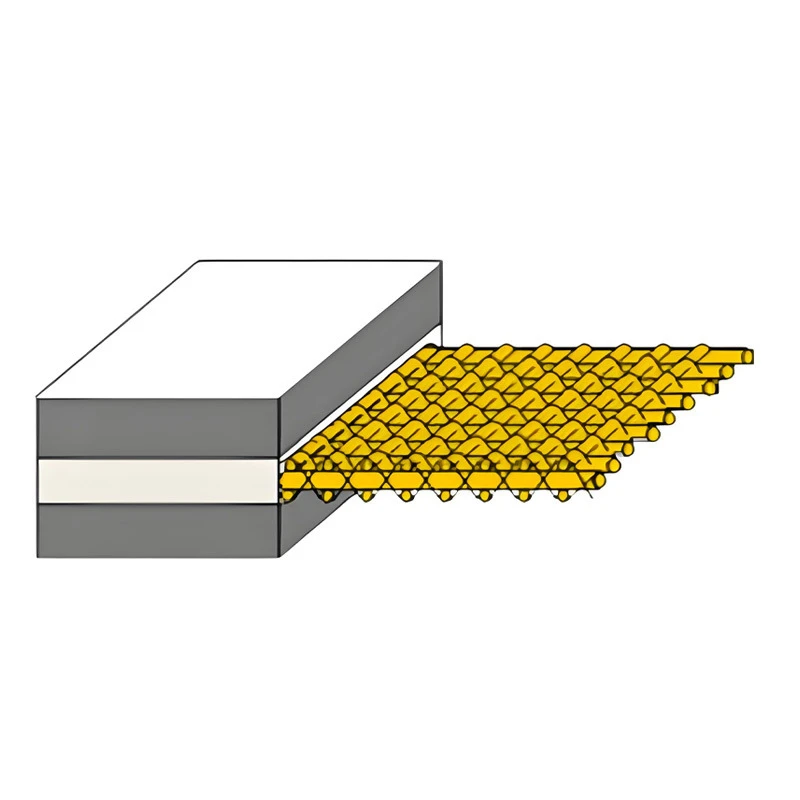
First off, let’s kill a myth right away: it’s not just about the belt’s width. I’ve had new operators come to me thinking a 48-inch belt can haul twice as much as a 24-inch one, and that’s partially true—but only if all other variables line up. The max load capacity of a rubber conveyor belt is a dynamic number, not a static stat stamped on the box. It depends on 5 core things, and I’m gonna tie each one to real-life stuff I’ve dealt with because that’s how I learned it, not from a manual.
-
The Belt’s Tensile Strength (That’s the “Backbone” of the Belt)
This is the big one. Think of tensile strength as how much the belt can stretch without snapping. We measure it in PIWs, which stands for Pounds per Inch of Width. For example, a basic rubber belt for light loads like parcels or grain is usually 50 PIW to 200 PIW. Heavy-duty mining or quarry belts? They’re 500 PIW, 1000 PIW, even higher for super large operations. I had a mining client last year who tried using a regular 300 PIW belt for hauling copper ore, and it snapped mid-shift after a month—they were down $20k in downtime alone. The problem? They forgot that higher tensile strength doesn’t just handle more weight, it handles that weight over longer distances. If you’re running a belt that’s 1000 feet long vs. 100 feet, the sag in the middle puts more stress on the tensile core, so you need a higher PIW rating to compensate. -
Width and Groove Depth (How Much “Space” You Have for Stuff)
Okay, back to that width myth. A wider belt definitely holds more material, but the depth of the grooves (the indents on the belt surface that keep stuff from sliding) matters too. Flat belts for pallets have almost no grooves, so their load per linear foot is lower than a cleated belt moving gravel. Let’s say you have a 36-inch flat belt: max load is roughly 150-200 lbs per linear foot. Add 2-inch cleats, that jumps to 250-300 lbs per linear foot, because the cleats contain the material so it doesn’t spill or shift. I work with a grain elevator that uses 42-inch belts with 1-inch sidewalls—they haul 320 lbs of wheat per linear foot, which is exactly the sweet spot for their operation. If they went wider, they’d waste money on a belt they don’t need, if they went narrower, they’d spill half the load and have to shut down to clean up. -
Material Density and Flow (What You’re Actually Hauling)
Duh, right? A cubic foot of feathers weighs like 5 lbs, a cubic foot of iron ore is 300 lbs. So that same 10-foot section of belt can hold way more ore than it can hold corn. I had a customer who tried switching from hauling soybeans to salt on the same 48-inch belt. Soybeans are ~48 lbs per cubic foot, salt is ~80 lbs per cubic foot. He didn’t adjust his load calculation, and the belt was overloaded by 40%—it stretched so bad the motor burned out. Material flow also plays a role: if your material is sticky (like wet clay), it piles up deeper, so you have to account for that extra volume that’s not just resting on the belt, but clinging to it. Powdery stuff like cement dust flows evenly, so you can pile it to the full groove depth without issues. -
Belt Speed and Trough Angle (How Fast You Move That Load)
Speed might seem unrelated, but if you’re moving material at 500 feet per minute vs. 200 feet per minute, the dynamic load is totally different. Faster speed means more material passes by per minute, so your per-linear-foot load has to be lower to keep the total weight the same. Also, trough angle—how much the belt is curved at the edges to hold material. A 35-degree trough (standard for most belts) holds more than a flat belt, but a 45-degree trough for super fine material gives even more volume. I had a construction client who upped their belt speed from 250 FPM to 400 FPM to get more material through, and they had to lower their load by 30% or risk slipping material or tearing the belt. They ended up keeping the slower speed because downtime from repairs was way more expensive. -
Environmental Conditions (The “Surprise Factors”)
This is the one most people forget until it’s too late. If you’re running a belt in a cold mine, rubber gets stiffer, so it can’t flex as well around pulleys, which adds stress and lowers max load. If you’re running it in a hot, sunny warehouse, rubber can soften, leading to stretch that makes the belt sag under load. Abrasive materials like rock will wear down the belt’s surface, so over time the effective load capacity drops by 10-15% after a year or two of use. I work with a sand quarry in Arizona—their belts get up to 120°F in summer, so they use heat-resistant rubber that keeps its tensile strength even when hot, so they can run at full capacity year-round. If they used a standard belt, they’d have to cut their load in half in July.
Now, let’s get to the numbers part, because I know you want concrete stuff, not just theory. Let’s use a common scenario: a 48-inch wide, 300 PIW rubber belt, moving grain (60 lbs per cubic foot) at 250 FPM, with 1-inch sidewalls and a 35-degree trough. The max load here is around 300 lbs per linear foot, which translates to ~72 tons per hour. But if that same belt is moving iron ore (300 lbs per cubic foot), the max load drops to 150 lbs per linear foot, ~36 tons per hour. If we switch to a heavier 1000 PIW belt, the ore load jumps to 400 lbs per linear foot, ~96 tons per hour.
Wait, but what if you’re already shopping for a belt, and you don’t want to do all this math? That’s where I come in. As a rubber conveyor belt supplier, I don’t just sell belts— I help you calculate the exact max load you need, no fancy software required (I’ve got a quick checklist I’ve used for years). Here’s what I ask every customer before recommending a belt: what material are you hauling, how much does it weigh per cubic foot, how fast is your belt running, what’s the length of the conveyor, and what kind of environment is it in (hot, cold, abrasive, wet)? That takes 5 minutes, and I can give you a number that’s actually accurate, not some generic stat off a website.
I’ll also tell you this: cutting corners on belt specs to save a few bucks upfront almost always costs more long-term. I had a small recycling company come to me last year who bought a cheap off-brand 36-inch belt for hauling plastic bottles. They thought a 150 PIW belt would be enough, but plastic is abrasive, and the off-brand core was subpar. After 8 months, the belt had stretched so bad they had to replace the whole thing, plus they had 2 weeks of downtime where they couldn’t process their recycling. A slightly more expensive, correctly spec’d belt would have lasted 3 years, easily. That’s the kind of story I hear all the time, and it’s why I’m upfront about max capacities—no overpromising, no hidden fine print.
Another thing: max load capacity isn’t just about not breaking the belt. It’s about safety, too. Overloaded belts can slip on pulleys, spill material onto the floor (which is a tripping hazard for your team), and even cause the conveyor to tip if the load is uneven. I once had a warehouse worker tell me they saw a belt tip over because someone piled too many pallets of boxes on one side—no one got hurt, but it shut down their order fulfillment for a day. Correctly calculating max load avoids that stuff, too.
So, to wrap this up: there’s no single answer to “what’s the max load of a rubber conveyor belt.” It’s a calculation based on tensile strength, belt dimensions, material properties, speed, and environment. But if you’re unsure, don’t guess—talk to someone who actually works with these belts every day, not a sales rep who’s just reading a manual.

If you’re in the market for a new belt, or you want to check if your current belt is working at its full safe capacity, hit me up. I can walk you through the numbers, adjust for your exact setup, and make sure you don’t end up with a broken belt that costs you time and money. Let’s chat about your project, I’m here to help.
Conveyor Belt Monitoring System References
- Conveyor Equipment Manufacturers Association (CEMA). Belt Conveyors for Bulk Materials, 7th Edition. CEMA, 2017.
- Rubber Manufacturers Association (RMA). Standard Specifications for Conveyor Belts. RMA, 2020.
- Mine Safety and Health Administration (MSHA). Conveyor Belt Safety and Load Guidelines. U.S. Department of Labor, 2019.
Alumina Technology (Qingdao) New Materials Co., Ltd.
As one of the most professional rubber conveyor belt manufacturers and suppliers in China, we also support customized service. With abundant experience, we warmly welcome you to buy rubber conveyor belt for sale here and get quotation from our factory. For price consultation, contact us.
Address: No.448, Jiangshan South Road, Huangdao District, Qingdao City, Shandong Province
E-mail: Gloria.zhang@contitech.cn
WebSite: https://www.altechconveyorbelt.com/
