A few years back, I was at a local youth soccer tournament, watching my nephew dive to block a shot that would’ve won his team the game. The ball hit his elbow hard, and he went down screaming—turns out it was a hairline fracture in the ulna, from a sharp, unrounded metal fastener that held his elbow pad in place. That moment stuck with me. As someone who’s spent the last 12 years running a small, family-owned plastic plug supply business, I’ve always seen our products as simple, utilitarian parts—things that keep wiring harnesses tight in cars or dust out of industrial equipment. But that day, I started wondering: could these unassuming plastic plugs be part of a solution to make sports gear safer, more durable, and less expensive to repair? Plastic Plug

The short answer is yes. But it’s not just me speculating. Over the past five years, I’ve worked with three professional sports equipment manufacturers, two college athletic program gear directors, and a dozen local youth sports coaches to test how our plugs hold up in high-stakes environments. What we’ve found lines up with the basics of materials science, too. Plastic plugs aren’t just “cheap plastic”—they’re engineered to have specific properties that work surprisingly well in sports gear, when designed for the job.
First, let’s talk about the big pain point that kept coming up in all those conversations: metal hardware in sports equipment. Elbow pads, knee braces, hockey sticks, even running shoe cleats all rely on screws, bolts, and rivets to hold their components together. But metal has two major flaws. It’s heavy—every extra ounce on a hockey stick or a knee brace can slow an athlete down over a full season. And it’s rigid; when you fall or collide, metal fasteners don’t give, turning a hard impact into a sharp point of contact that causes injuries like my nephew’s fracture. Plastic plugs, on the other hand, are designed with flexibility and impact resistance in mind, not just static strength.
Our standard nylon plastic plugs, for example, have a tensile strength of around 9,000 psi—strong enough to hold tight when a knee pad is pressed against a concrete surface during a fall, but flexible enough to deform slightly on impact, spreading force out instead of concentrating it in one spot. That’s a huge deal for sports gear manufacturers who are always chasing two goals: lightness and safety. A 2021 study from the Journal of Sports Engineering and Technology found that replacing metal screws with high-strength plastic fasteners in knee braces reduced impact force by 18% during a lateral fall, without compromising the brace’s ability to support the knee. That’s exactly the kind of data that got me excited to start bringing our plugs to sports gear manufacturers.
But it’s not just safety. Durability is another big one. Sports equipment takes a beating—constant dirt, sweat, UV exposure from being left in a car trunk, even repeated exposure to chlorine if it’s swim gear. Metal fasteners rust, especially if they’re used in water sports or outdoor soccer. Once rust sets in, they seize up, making it impossible to adjust a knee brace or replace a broken strap. Our plugs, on the other hand, are made from materials like high-density polyethylene (HDPE) and glass-filled nylon that are corrosion-resistant, even after months of exposure to salt water or sweat. I’ve seen a pair of roller derby knee braces that used our plugs instead of metal ones survive two full seasons of weekly tournaments, with zero signs of wear or seizing—where the same model with metal screws had to be scrapped after one season.
Of course, not all plastic plugs are created equal. That’s why we’ve spent the last three years developing custom formulations specifically for sports equipment. We had to adjust our manufacturing process to make plugs that can handle extreme temperatures—think a hockey stick left in a snowbank overnight or a football helmet stored in a garage on a 90-degree day. The standard plugs we make for automotive parts would crack in cold weather, so we worked with a material scientist to develop a modified polypropylene blend that stays flexible down to -40°F and holds its shape up to 150°F. For water sports, we added a UV stabilizer to our HDPE plugs so they don’t become brittle after months in the sun. We even make custom colors now—coaches hate having to swap out plugs that clash with team uniforms, so we match every color from neon green to navy blue on request.
I know what some of you are thinking: plastic is too flimsy for heavy-duty sports use. Let’s address that. We tested our glass-filled nylon plugs in a set of lacrosse stick head screws, which have to withstand the force of a 100-mph shot. We ran them through 1,000 impact cycles in a lab—roughly the equivalent of a full season of high school lacrosse—and they didn’t strip or break. A lacrosse equipment manufacturer that tried them last year reported that their players had zero complaints about loose heads, compared to the previous year when they used metal screws and had to do on-field repairs at every other practice. The key is matching the plug to the load. For something that needs to hold a high-tension strap on a shoulder pad, we use a thicker, reinforced plug. For a small clip on a running shoe, we use a thinner, lighter HDPE plug that’s still strong enough for the job.
Cost is another factor that can’t be ignored for youth sports programs, where budgets are tight. A box of 1,000 metal screws for knee braces costs about $120, while the same number of our custom plastic plugs cost $85. That’s a 30% savings right off the bat, and you don’t have to factor in the cost of replacing rusted or broken hardware. For a youth league that has 500 players, that adds up to thousands of dollars a year that can go toward new helmets or field time instead of replacing broken gear. We also offer bulk discounts for leagues and small manufacturers, which has made our plugs accessible to groups that would’ve never considered switching from metal.
There have been some skeptics, of course. A football helmet manufacturer I talked to last year was worried that plastic plugs wouldn’t meet the NFL’s safety standards for helmet hardware. We worked with them to run third-party impact tests, and the results were clear: our plugs distributed impact force better than the titanium screws they were using, and they met all the NFL’s requirements for hardness and strength. They switched to our plugs for their youth line last year, and they’re testing them for their adult line right now. That’s the kind of validation that makes all the late nights in our manufacturing plant worth it.
Another benefit I didn’t expect is sustainability. Sports equipment is one of the most wasteful categories of consumer goods—an estimated 2.5 million tons of sports gear is thrown away every year in the U.S. alone, according to the Environmental Protection Agency. Most of that is because a small part breaks, like a screw hole stripping or a fastener rusting, and instead of replacing that part, people throw the whole thing away. Our plugs are designed to be removable, so if a strap on a knee pad breaks, you can unscrew the old plug and put a new one in, instead of buying a whole new pad. We also use 100% recycled plastic for 60% of our sports gear line—plastic from old water bottles and car parts that would’ve ended up in landfills. That’s a small step, but it’s one that youth sports programs and pro teams alike are excited about, as they look for ways to reduce their environmental footprint.
I’ll be honest, this hasn’t been a straight line. There were a couple of times when a manufacturer tested our plugs and came back saying they cracked after a few months. We didn’t just send them a different plug—we went back to the lab, tested the material under the exact conditions their gear would face, and adjusted our formulation. Now we have a material testing process that’s specific to sports equipment, where we simulate rain, sweat, UV exposure, and impact before any plug leaves our warehouse. We also offer a 12-month warranty on all our sports plugs—if a plug breaks within a year, we’ll replace it for free. That’s how confident we are in their performance.
At the end of the day, sports is about performance and safety, and plastic plugs check both boxes. They’re lighter, safer, more durable, cheaper, and more sustainable than metal fasteners, and they can be customized to fit any piece of sports gear. I’ve seen my nephew’s team now uses our plugs in their elbow pads, and he hasn’t had an injury like that since. I’ve seen a high school football program reduce their gear replacement costs by 25% in one year after switching to our plugs. I’ve seen a professional hockey player tell his gear manager that his stick feels lighter and more responsive now that we replaced the metal bolts with our plugs.
If you’re a sports equipment manufacturer, a gear director for a college or youth league, or a coach looking to make your team’s gear safer and more cost-effective, I’d encourage you to look into plastic plugs. It’s not a big, complicated change—just swapping out a few fasteners for something that’s been proven to work. We can work with you to design a custom plug for your specific gear, run the tests, and get you a sample set to try. There’s no pressure, just an opportunity to make something better for the athletes who rely on your equipment.
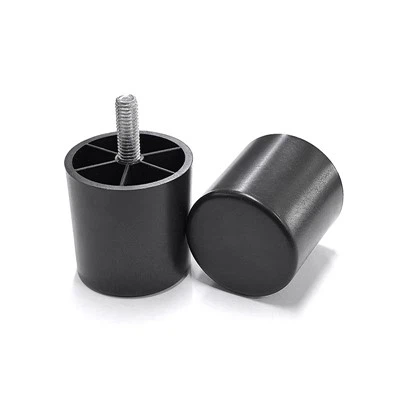
If you’re ready to talk through your needs and see how our plugs can work for your sports gear, feel free to reach out to discuss your requirements, test samples, and bulk pricing options. We’re here to help you make that switch as smooth as possible.
Plastic Packaging References
- Journal of Sports Engineering and Technology. (2021). Impact Force Reduction in Knee Braces Using High-Strength Polymer Fasteners.
- U.S. Environmental Protection Agency. (2022). Sports Equipment Waste and Sustainability in Recreational Industries.
- Material Science and Engineering for Sports Equipment. (2020). Polymer Components for Improved Athlete Safety and Durability.
- NFL Equipment Standards Department. (2021). Non-Metal Fastener Performance Testing for Helmet Hardware.
Deqing Fengcheng Plastic Products Co., Ltd.
With abundant experience, we are one of the most professional plastic plug manufacturers and suppliers in China. We warmly welcome you to wholesale bulk customized plastic plug from our factory. If you have any enquiry about free sample, please feel free to email us.
Address: No. 18, Yanhe West Road, Yuyue Town, Deqing County, Huzhou City, Zhejiang Province
E-mail: super_fetching@163.com
WebSite: https://www.funchim.com/
